EN
EN



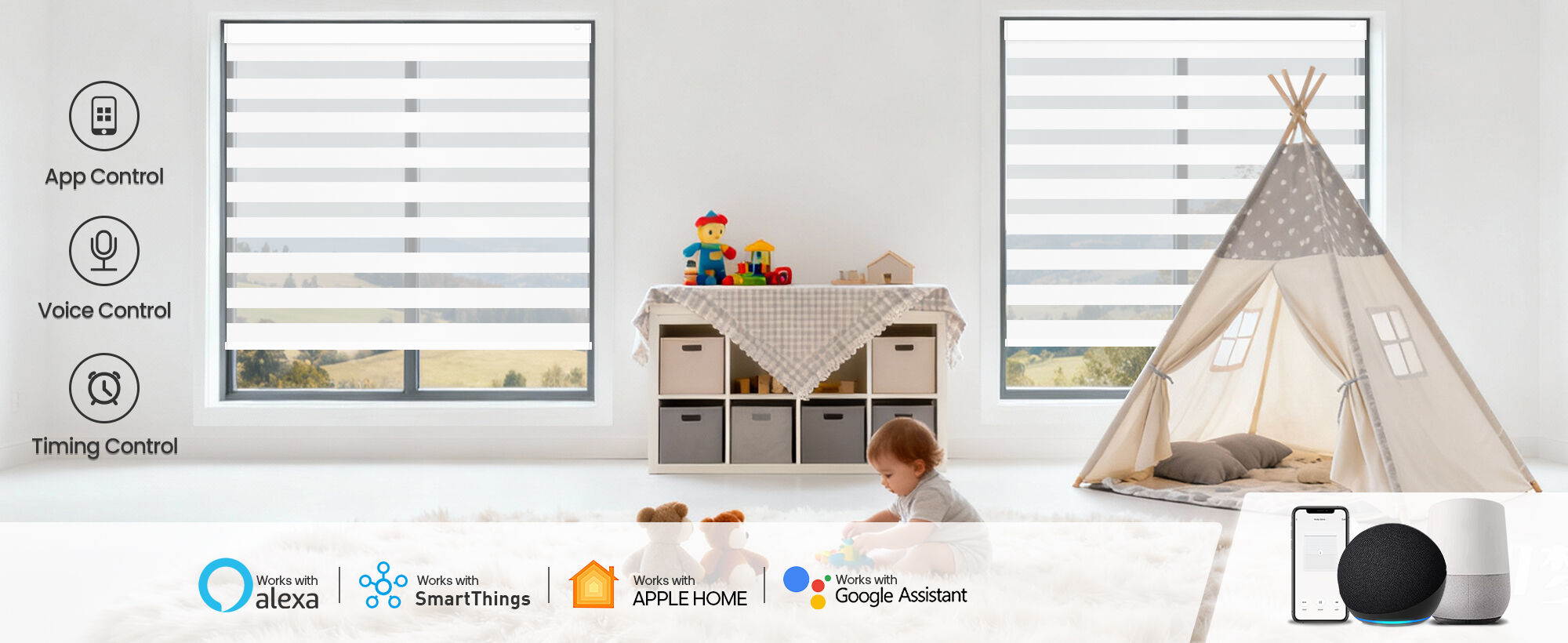
Have you ever carefully observed a set of blinds?
Most people focus on the color, the width of the leaf, and the smoothness of its opening and closing. Very few people would ask: What exactly is the material wrapped inside this leaf?
This is actually a rather interesting oversight. The blinds do everything for you every day, blocking the sun, filtering the light, and maintaining privacy by being placed right by the window. But it is not the aluminum rod or the piece of wood that actually performs these tasks; it is the "skin" attached to them - the fabric.
The engineers of Mingchen Sunshade call this "the second layer of skin for the blinds". In their opinion, whether a blind is functional, how long it lasts, and how comfortable the light and shadow effect are - 70% of these factors depend on this layer of fabric.
I . Choosing the wrong fabric means losing half the functionality of the blinds.
Let me tell you a true story.
Last year, a customer came to us, complaining that the blinds installed in his home for less than two years had turned yellow, their edges were frayed, and they gave off a smell when exposed to the sun. When the technicians from Mingchen arrived at his house, they laughed - the fabric covering the blades was just ordinary indoor decoration fabric, and it had never undergone any sun protection treatment at all.
"It's like going out in summer without applying sunscreen, and expecting your skin not to get tanned." The technician made this analogy at that time.
The fabric of the blinds essentially acts as the first line of defense for the interior space, blocking the onslaught of the sun's rays. Ultraviolet rays, infrared rays, and visible light keep coming in waves. Ordinary fabrics can't withstand this, and within a few months, they will show their original state: fading, weakening, deforming, and in severe cases, emitting unpleasant odors.
Mingchen chose a different approach when she selected the fabric for her own blinds.
The base material is high-density polyester fiber. This is not ordinary polyester; it is the "original yarn sun protection" process where nano-sized titanium dioxide particles are added during the spinning stage. Titanium dioxide, in professional terms, is called a UV blocker. In simpler terms, it is like giving each fiber a hidden sun-protective coat. When UV rays strike, they are reflected back and never come into contact with the fiber itself.
The actual test results are: UPF 50+, with a UV blocking rate of over 99%. Even after washing 50 times, the sunscreen's protective effect remains intact.
II. The "Three-Layer Structure" of Fabrics
If you cut a piece of Mengchen's venetian blind leaf, you will see three layers.
The surface layer is a functional coating. This is not for aesthetics, but for ease of maintenance. The anti-static treatment makes it difficult for dust to adhere, and it is also not afraid of a layer of fog forming on the blades during the humid weather in the south. The hydrophobic and oleophobic coating enables oil stains and water marks to be easily wiped off, and it is not afraid of the kitchen windows being affected by cooking fumes.
The middle layer is the structural weaving layer. Here lies the secret of the "tension" of the blinds. Through the weaving with different densities of warp and weft, the fabric acquires a characteristic: it is soft in the horizontal direction and stiff in the vertical direction. The softness in the horizontal direction is to ensure smooth and silent movement when the leaves flip; the stiffness in the vertical direction is to prevent the leaves from deforming or curling over time.
The back side is the functional reinforcement layer. For the full blackout series of blinds, the back side will be coated with a layer of black matte finish. This layer is not for blocking light - the middle layer has already dried - but for absorbing light. It prevents light from passing through the gaps in the blades and then reflecting onto the ceiling, causing indoor light pollution.
One user described this experience as follows: "At noon, when I pulled down the blinds, the room instantly became like dusk, but not the pitch-black kind; it was a quiet darkness."
III. Different spaces require different "skins"
In Mingchen's product manual, the fabric for blinds is divided into three categories, corresponding to the needs of different spaces.
The living room and the study are equipped with the "Half-Blind Series".
The light transmittance of this series ranges from 20% to 60%. When the leaves are fully closed, the light is filtered into soft, diffused light that is not harsh but still bright enough; when the leaves are slightly open, the sunlight casts stripes similar to those of a zebra on the floor and walls. Mingchen's designers call this "adjustable atmosphere" - you can work when you want to, or just relax when you want to, and the light follows your mood.
The bedroom and the audio-visual room are equipped with the "Full Shading Series".
The light-blocking rate of this series can reach over 99%. The core technology consists of two layers: one layer of high-density weaving to block direct light, and another layer of black diffusing coating to absorb scattered light. Some users have reported: "On weekend mornings, I slept until 10 o'clock and the room remained completely dark, with no light penetrating at all."
The kitchen and bathroom are equipped with the "Waterproof and Oilproof Series".
These two places have heavy humidity and a lot of smoke. Ordinary fabrics are prone to mold and absorb odors. Mingchen has specially treated the surface of the fabrics in this series. When water droplets fall on it, they roll off directly. Oil stains can be wiped off with a damp cloth. The material itself also contains anti-mold agents, so it won't develop black spots even if it remains damp for a long time.
IV. Technical Content of the Fabrics
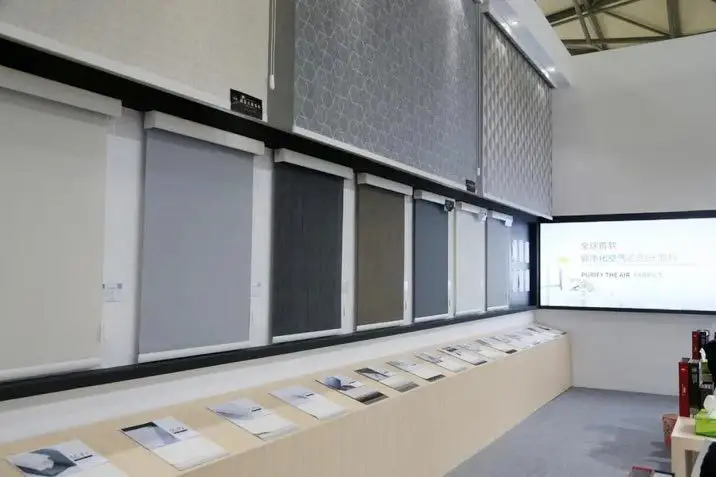
At the Guangzhou Sunshade Doors and Windows Exhibition in February this year, a colleague brought samples of Mingchen's fabrics and examined them for a long time. Then he asked, "This fabric feels quite soft, but the drapeability is so good. How did you manage to achieve that?"
The answer lies in the weaving process.
Mingchen uses double-sided jacquard weaving, not simple plain or twill weaving. The advantage of this weaving method is that the density of the warp and weft threads can be independently controlled. If the warp threads are denser, the longitudinal tensile strength will be stronger; if the weft threads are sparser, the transverse part will be softer. Combined together, it is as mentioned earlier, "soft on the side, firm in the longitudinal direction".
Another technical aspect is color fastness.
Ordinary fabric dyeing involves dyeing the already woven fabric. The color adheres to the surface of the fibers. When exposed to the sun, the dye molecules gradually decompose, causing the color to fade. Mingchen uses pre-dyeing before spinning. The pigment is added when the polyester is still in a liquid state, and the spun silk is already that color. The color that fades when exposed to the sun is only the extremely thin outer layer; the color inside remains intact. Therefore, it is not an exaggeration to say that the color does not fade for five or ten years.
V. What users cannot express is what technology should address.
Mingchen's R&D team has a habit: Every year, they randomly visit dozens of users and do not ask about satisfaction levels, but only ask, "Is there any moment when you felt that this thing could be even better?"
The collected answers were diverse. Some said, "The morning sunlight was too strong and I was jolted awake." Others said, "When the child was sleeping, I opened the blinds and the noise was a bit loud." Still others said, "We have cats at home and the blinds are covered with fur, making it difficult to clean."
These issues eventually all turned into improvements in the fabric.
If you think it's too bright, there's an intelligent model with a light sensor. It will automatically open slowly at sunrise, without waking you up.
If you prefer a silent design, the blade coating has been optimized, reducing the friction coefficient. The opening and closing noise is controlled below 28 decibels, which is even quieter than the sound of turning pages.
If it's difficult to clean, an anti-static coating has been added. When cat hair falls on it and is blown by the wind, it will come off easily.
A user's feedback was posted on the whiteboard of the R&D department. It was written by a young mother: "My daughter said that the blinds seem to have magical powers. In the morning, they are bright; at noon, they are dark; and in the afternoon, they become bright again. I told her that it's not the blinds that change, but the sun that moves." Below, someone wrote a line in red pen: This is exactly the effect we want - to make users feel the light and shadow, rather than the blinds.
VI. The Next Stop for Fabrics
The global sun protection fabric market is experiencing steady growth, and it is projected to reach approximately 179.5 billion yuan by 2031. Behind this figure lies the consumers' increasingly detailed demands for the quality of their lives.
Mingchen's research directions are two.
One is a smarter fabric. When combined with sensors, this fabric can sense the intensity of light and the UV index, and automatically adjust the transparency. Without human intervention, the window will know when to block and when to allow light through.
The other one is a more environmentally friendly fabric. It is made from recycled plastic bottles and the production process uses waterless dyeing. After the product's lifespan ends, it can be recycled and reused. A user put it very well: "Buying a good set of blinds that you can use for ten years without replacement is already a contribution to the Earth."
VII. Closing Remarks
Once, when I visited Mingchen's showroom, the staff took out two fabric samples for me to touch. One was an ordinary fabric, and the other was one they had developed themselves. They were of the same thickness and the same color, but the texture was completely different - the ordinary one felt a bit rough to the touch, while the one they made felt like a baby's skin.
I asked how this was achieved. The staff member replied, "We didn't do anything particularly special. We just made sure that the friction coefficient of each batch of fabric was below 0.3. If it was too high, we would redo it."
Later I learned that in order to achieve this "below 0.3" standard, they discarded over a dozen prototypes and spent nearly a year doing so.
Blinds are not high-tech products. They have existed for hundreds of years and are so well-established that many people think there is nothing more to be said about them. However, the people at Mingchen do not think so. In their view, as long as there is still a single uncomfortable aspect in the user's usage, it is worth redoing it.
That layer of fabric, which was overlooked by most people, is the starting point for their rework.
Contact information:
Interested in becoming a dealer or learning more about our new range of shades?
Contact our sales team directly: [[email protected] ]
Call us: [+8613508960041 ]
Fill out the form to learn about our product spec sheets and wholesale pricing now:https://www.86douglas.com/contact-us