 ×
×
At 7 a.m., the blinds in the bedroom gradually open to a 15-degree angle, allowing the morning light to fall precisely on the bedside table instead of the face. This is not magic; it's a preset wake-up program.
At ten o'clock in the morning, the sunlight became dazzling. The blinds automatically adjusted the angle of their slats, keeping the room bright while filtering the direct light into soft diffused light.
At three in the afternoon, when no one was at home, the blinds began to open and close randomly, simulating the presence of someone at home - it wasn't that the owner had forgotten to close them, but that the "away mode" was operating automatically.
These scenes are becoming increasingly common in more and more households. What's driving all this is the fact that the seemingly traditional category of smart blinds is undergoing a profound transformation.
1. Smart Sunshades: From "Luxury" to "Standard Feature"
Five years ago, smart blinds were exclusive to luxury homes. Now, they are becoming a regular option on the decoration list of ordinary families.
Behind this lie two clear main lines of demand.
The first one is the upgrade of living quality. People have higher and higher requirements for their living environment, and light management has become an important part. It is not simply about "blocking the sun", but "making good use of the sun" - different times and different scenarios require different light.
The second factor is the maturity of technology. The decline in the cost of wireless communication, low-power chips, and long-lasting batteries has brought the price of smart blinds down from several thousand yuan to several hundred yuan, making them accessible to ordinary households.
A user described his feelings like this: "I used to think that smart curtains were high-tech and far from me. Later, I found that I could buy one for just a few hundred yuan and it wasn't difficult to install, so I gave it a try. Once I started using it, I couldn't go back."
2. The "Three Core Features" of a Smart Blind
The differences between a smart blind and a regular blind mainly lie in three aspects.
First, it has its own "eyes".
The light sensor is one of the most crucial components of smart blinds. It constantly monitors the light intensity both inside and outside the room to determine whether it is too bright or too dark now.
With these "eyes", the blinds can make their own decisions. When the sun is too strong, it will adjust the angle of the slats smaller; when it's cloudy, it will open up a bit. You don't need to worry about it.
Second, it has its own "brain".
The control chip is the decision-making center. It receives data from sensors, executes the rules you set, and processes your remote instructions.
You can tell it through the mobile app: turn on 15% at 7 a.m. on weekdays and completely turn off at 10 p.m. It remembers and does it every day without ever being lazy.
Thirdly, it has its own "limbs".
The micro motor is an actuator. After receiving instructions, the motor drives the blades to flip or rise and fall. A good motor operates quietly, moves precisely and has a long service life.
When combined, these three parts transform the blinds from a passive tool into an active "light manager".
3. The Three Issues You Care About the Most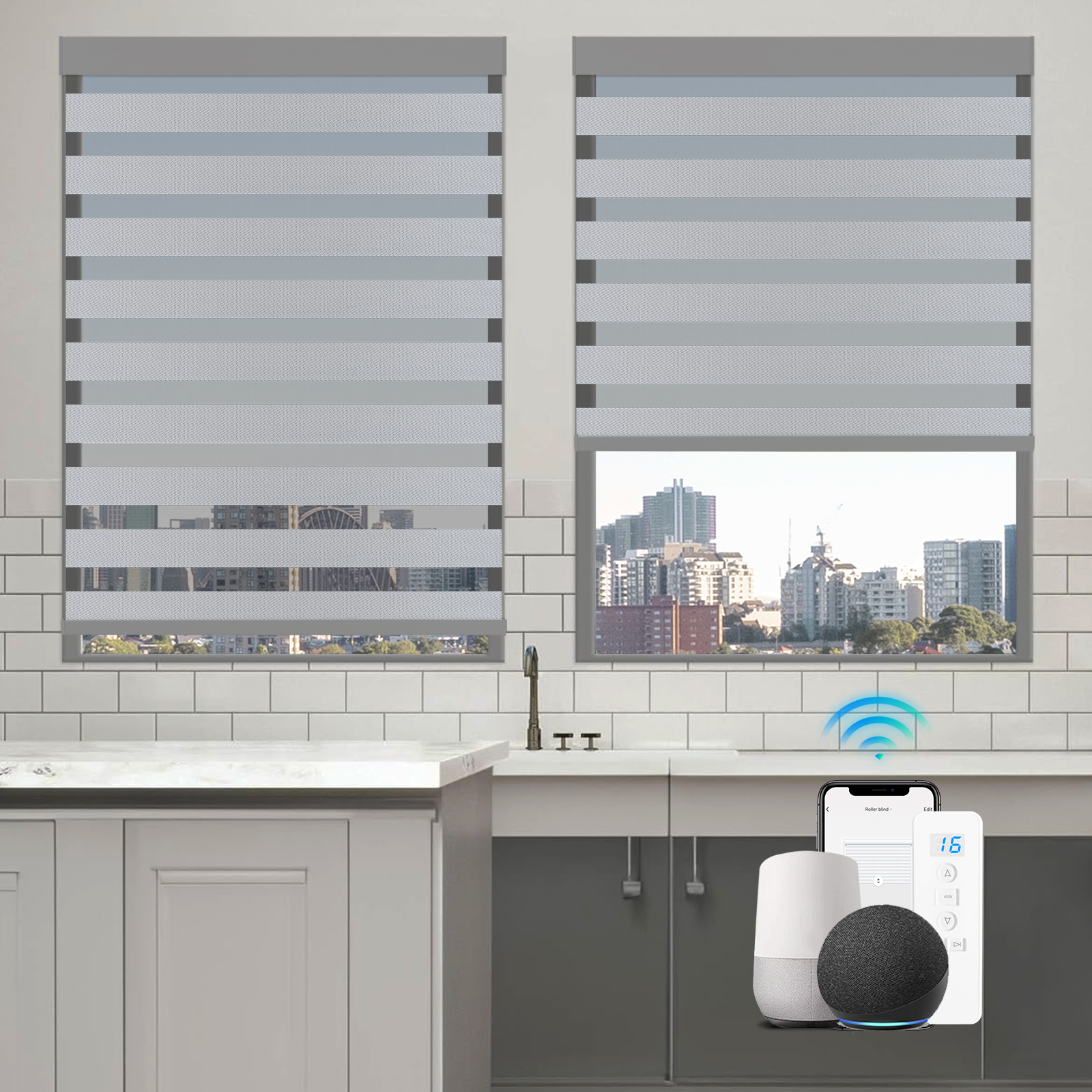
Regarding smart blinds, these are the three questions that users ask most frequently.
Question 1: Is the installation troublesome?
No problem. Most of the smart blinds nowadays adopt a no-drilling design.
A set of adaptive pressure adsorption tracks, no need for an electric drill, no need for screws, and no need to hire a professional. Just stick the track onto the window frame, tighten the adjustment knob, and when you hear the prompt sound, it's installed. The entire process takes about ten minutes.
When disassembling, unscrew it in the opposite direction and no marks will be left on the window frame. For tenants, this means that they can take it away when moving.
Question 2: Do you need to charge it? Yes, but not frequently.
It is equipped with a built-in lithium battery with a capacity of around 5000 to 6000 milliampere-hours. Under normal daily opening and closing 2 to 3 times, the battery life can last for 6 to 8 months.
The charging port is a hidden USB-C type. You can charge it with a regular phone charging cable. When the blinds are raised to the top, the interface can be seen without the need to climb a ladder.
Question 3: Will it be very noisy?
Good smart blinds are very quiet.
The operating noise of the brushless motor is below 28 decibels - quieter than the sound of turning pages in a library. The friction between the blades has also been optimized, and there is almost no "rustling" sound when they flip.
A user with a baby at home said, "When my child was taking a nap, I lowered the blinds in the next room with my phone and there was no sound at all."
4. Three Most Practical Scenarios
I f you are considering purchasing smart blinds, these three scenarios best demonstrate their value.
Scene One: A Gentle Wake-Up in the Morning
Many people hate being woken up by an alarm clock, but they can't make the sun rise later. The solution offered by smart blinds is "gradual opening".
You can set it up as follows: At 7 a.m., the blinds open 15%. At 7:10 a.m., they open to 30%. At 7:30 a.m., they open fully.
The light comes in gradually, giving your body time to adjust. Some users have said, "After using this feature, I feel much better in the morning. I'm not woken up by a loud noise, but by the light inviting me to wake up."
Scene Two: "Automatic Dimming" during the Daytime
You were sitting in the living room reading a book when the sunlight gradually moved over and began to dazzle your eyes. In the past, you would have to get up to draw the curtains, but now you don't have to.
When the light sensor detects excessive light, it automatically adjusts the angle of the blades - not completely closing them, but setting them to an angle that is just not blinding. You may not even notice the entire process, only feeling that "it doesn't seem so sunny anymore."
Scene Three: "Peace of Mind When Leaving Home" in the Evening
You go out to work and forget to close the blinds. No problem. Just tap on your phone.
Even smarter is the "away from home mode" - the blinds will open and close randomly to imitate the presence of people at home. Close them at 3 p.m. today, open them at 3:30 p.m., and close them again at 4:30 p.m. Even thieves would hesitate.
5. It can also "communicate" with your home
The greatest value of smart blinds does not lie in what they can do on their own, but in what they can do in conjunction with other devices in your home.
Interact with smart bulbs. When you fully close the blinds, the lights will automatically turn on and the brightness will be adjusted to 50%.
It can be linked with the air conditioner. When the sunlight is too strong, the blinds will close first to reduce the heat entering, and the air conditioner won't have to work so hard. Some users have calculated that by using the smart blinds in combination, the electricity bill for air conditioning in summer can be saved by about 15%.
It is linked with the door lock. The moment you lock the door when leaving home, the blinds automatically switch to the "away mode".
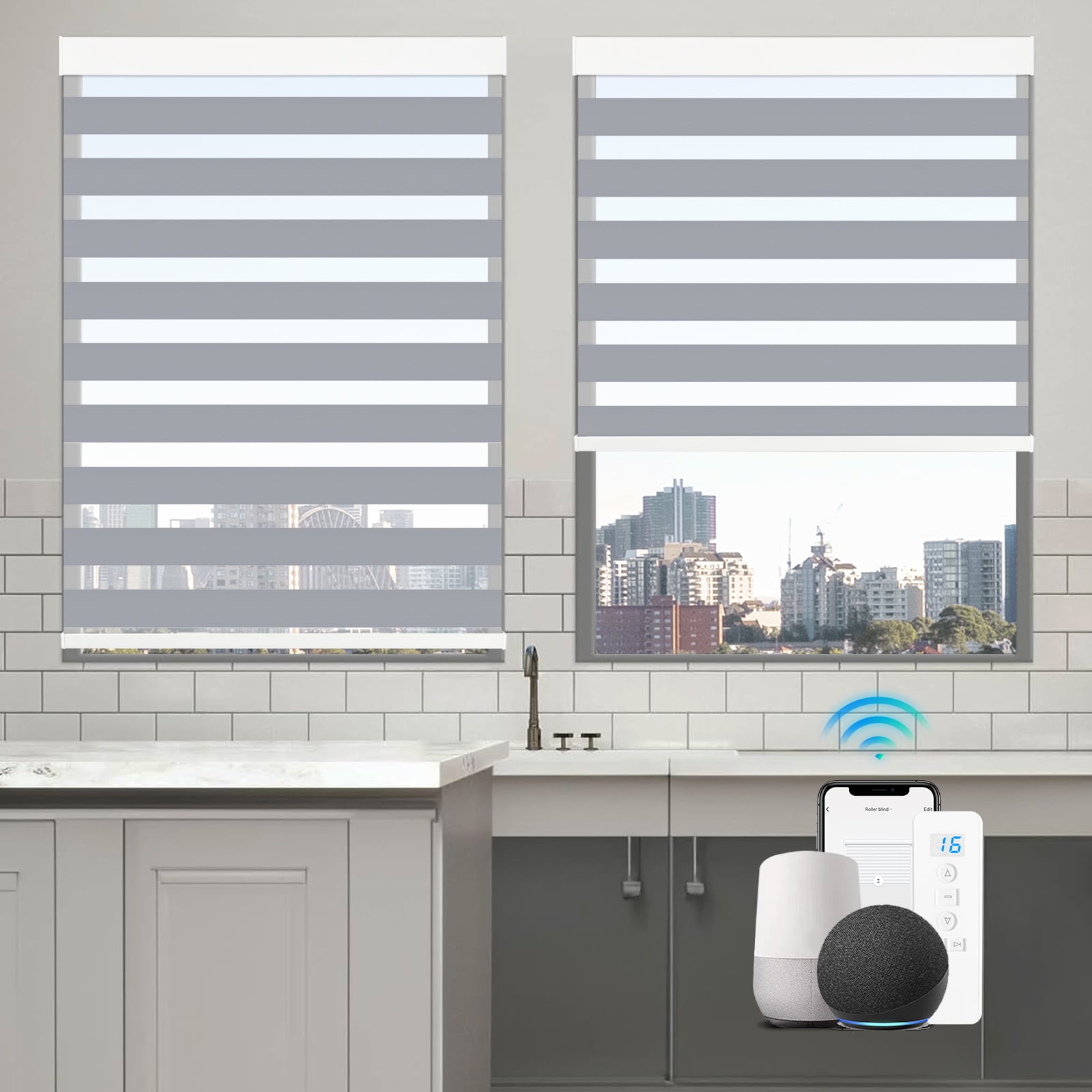
Integrate with smart speakers. When you say "I want to watch a movie", the blinds will close for you, the lights will dim, and the curtains will be drawn.
This is the true meaning of smart home: not individual isolated devices, but a system that works in coordination. The blinds are one part of it, but this part is related to light, temperature, privacy and energy consumption.
6. Privacy and Security, It Has Thought of That for You
With smart products being connected to the internet, many people are concerned about privacy issues.
Good smart blinds have several layers of design for privacy protection.
Local control takes priority. You can choose to connect only via Bluetooth without going online. All control commands are executed locally, and no data is uploaded.
Encrypted transmission. If you need remote control, the data is transmitted in an encrypted form. The server is located in China and complies with relevant regulations.
Unobtrusive collection. This blind has no microphone or camera. It only responds to your voice commands and does not record audio or video.
7. In the future, it will become smarter and smarter.
The technology of smart blinds is still evolving rapidly.
More precise perception. Future products will integrate more sensors - temperature, humidity, air quality, and even ultraviolet index. Blinds will not only manage light but also participate in the comprehensive regulation of the indoor environment.
Smarter decisions. By learning your usage habits through AI, the system can predict what you want to do next. As soon as you sit down on the sofa, the lighting has already been adjusted to the most suitable state for reading.
More seamless integration. Compatibility across brands and platforms will keep improving. Whether your home is equipped with Mi Home, Apple HomeKit or Google Home, the blinds can be integrated into any of them.
An industry observer described it this way: "Five years ago, smart blinds were 'curtains that could be remotely controlled'. Now, smart blinds are 'light managers that can think'. In the future, smart blinds will become part of the building - a window that can breathe, adjust and learn."
8. Conclusion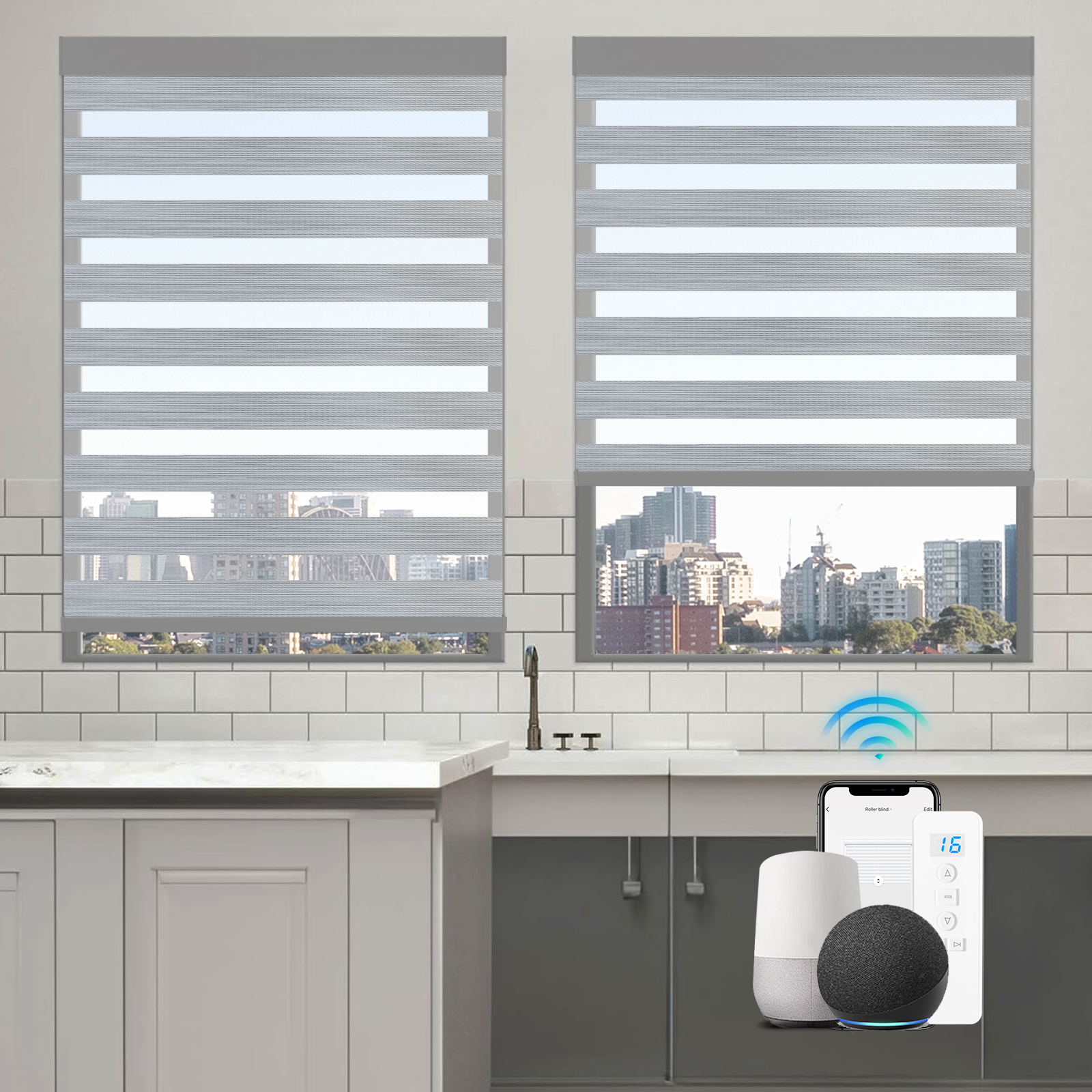
Smart blinds are not a new thing, but they are becoming smarter and more user-friendly.
Early electric curtains merely replaced the pull cord with a remote control. Today's smart blinds can sense light, remember habits, be controlled remotely, and integrate with the entire house.
Its core value is not "electricity", but "peace of mind". You don't have to get up every day to draw the curtains, you don't have to worry about the sunlight being too dazzling, and you don't have to be concerned about forgetting to close them when you go out.
After using the smart blinds, I realized that adjusting the light could be so effortless. Before, I had to get up several times a day to draw the curtains, but now I don't have to. It does it by itself.
This might be the best state of smart products: they get things done for you, and you don't even notice them doing it.
You just need to enjoy that perfect light streaming through the window.
Contact information:
Interested in becoming a dealer or learning more about our new range of shades?
Contact our sales team directly: [[email protected] ]
Call us: [+8613508960041 ]
Fill out the form to learn about our product spec sheets and wholesale pricing now:https://www.86douglas.com/contact-us


Copyright © 2026 Weifang Mingchen Sunshade Technology Co., Ltd. All Rights Reserved.
 EN
EN

