EN
EN



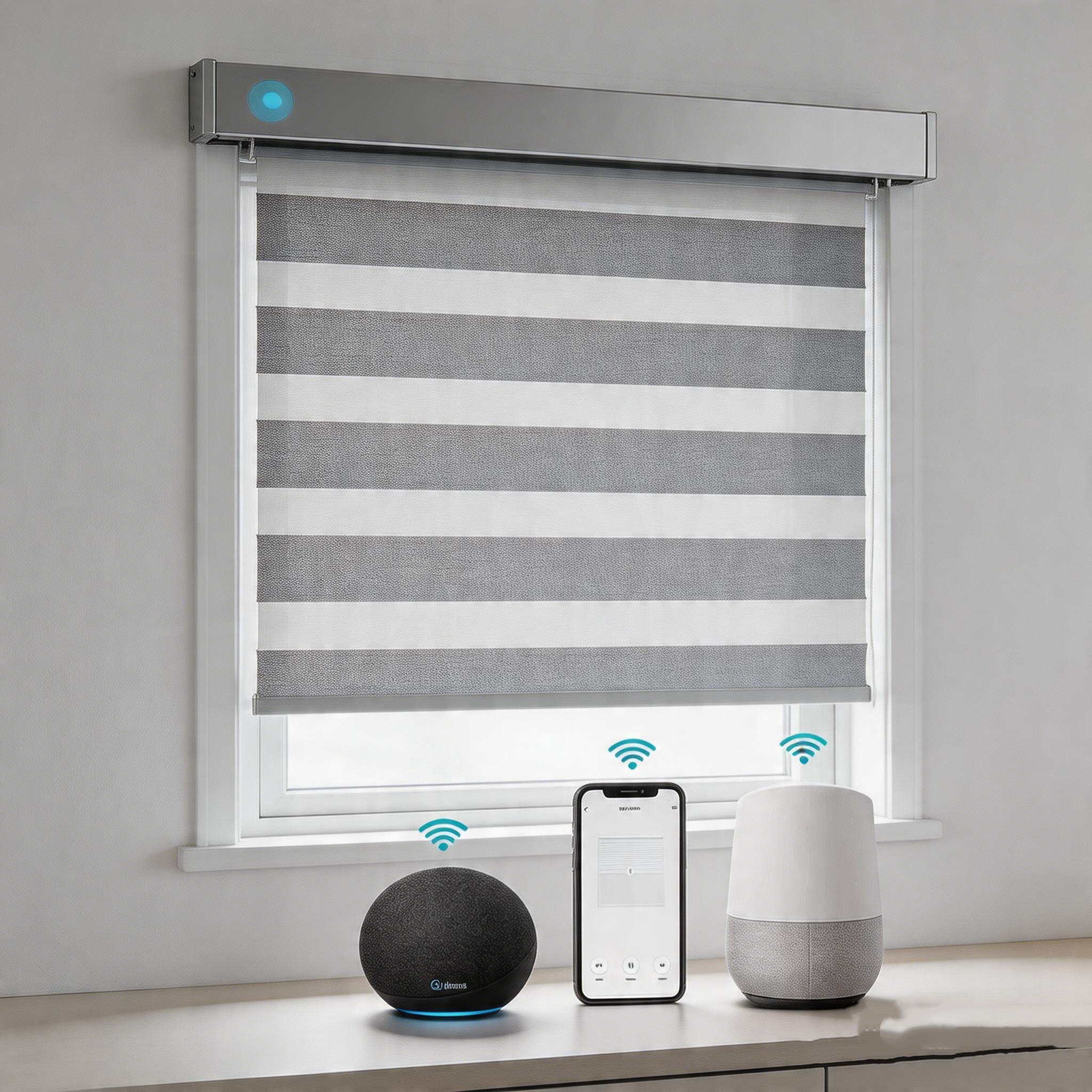
Choosing the right fabric for your blinds is one of the most underestimated tasks in home decoration.
Have you ever had this experience -
The blinds at my friend's place let in the sunlight in soft stripes, which looks nice and creates a great atmosphere. How about yours? Either they let in light like a sieve or they make the room as dark as a darkroom.
The one in the other family still looks as good as new after three years, but yours started to curl at the edges and fade after just half a year, and the leaves are now standing up like bananas.
It's not that you have bad luck or that you bought it too cheaply. Most likely, it's because you chose the wrong fabric.
Today, we'll go over the topic of window blind fabric from the very beginning. No beating around the bush, no mysticism, just the facts.
First, ask yourself: What kind of "light" do you want?
The function of fabric is essentially to manage light. Different spaces require different kinds of light.
The first type: Complete blackout - it's all about "not being able to see your hand in front of your face"
Who is it suitable for? People who can't be disturbed by light when sleeping, people who have a home theater, and people who need to clearly see the projection in a meeting room.
What's the key point? It's the coating on the back. Good blackout fabric has a uniform layer of black adhesive on the back, with a light-blocking rate of over 99%, no odor, feels soft to the touch, and won't crack even after long-term use.
A tip to avoid: Some cheap items have their backs painted with ordinary black paint, which becomes sticky, cracks and gives off a smell when exposed to the sun. You can tell the difference just by smelling.
The second type: Semi-shade - It should be bright, but not dazzling.
Who is it suitable for? Living rooms, studies, and offices. These places need natural light but should not be directly exposed to the sun to avoid glare.
What's the key point? It's whether the light that comes through is "soft" or "hard". Good semi-sheer fabric will diffuse the sunlight passing through the fiber gaps into even, diffused light, which is not dazzling but still bright enough.
Pitfall: If the fabric is too thin, it will be as transparent as a gauze curtain, offering poor privacy; if it's too thick, it won't achieve the "half-covered" effect. Finding a balance is crucial.
The third type: Sunscreen fabric - enjoy the view without the sunburn
Who is it suitable for? Floor-to-ceiling windows, balconies with a view, sunrooms. You want to block UV rays but don't want to lose the view outside.
The key lies in what? It lies in the "one-way vision" effect. It is clear when viewed from the inside but blurry when seen from the outside. This requires the support of a composite process of PVC and glass fiber.
A pitfall to avoid: Cheaper sun fabric makes the view from the inside blurry, as if there's a layer of frosted glass in between. That's not sun protection; it's just blocking your view.
Second, ask yourself: How many years do you want it to last?
The fabric material determines the lifespan of the blinds. There are three mainstream types on the market, each with its own advantages and disadvantages.
Polyester fiber - the most commonly used "Jack of all trades"
Advantages: It comes in many colors, is wrinkle-resistant, sun-resistant and inexpensive. Disadvantage: The very cheap ones tend to pill.
It is suitable for most families and offices. If your budget is limited, choosing this one won't be a mistake.
Glass fiber - the solution for all kinds of "troublesome environments"
Advantages: Fireproof, mold-proof, dimensionally stable (does not shrink), and moisture-resistant. Disadvantages: Limited color options.
Where is it suitable? Hospitals, schools, hotels, and houses by the seaside. These places have strict requirements for fire prevention and moisture resistance, which ordinary fabrics cannot meet.
Linen/Textured Fabric - Paying for Appearance Quality
Advantages: It looks good. The natural texture and feel are something that synthetic fibers can't imitate. Disadvantages: It's expensive and not easy to take care of. Dust tends to accumulate in the crevices.
Suitable for high-end residences, boutiques, and clubs. If your project emphasizes design and has a sufficient budget, this is worth considering.
Three. Several Real Scenarios, Match Your Situation
Scenario One: Your bedroom faces south and the sunlight comes in at 5:30 in the morning in summer.
What you need is fully blackout fabric. Also, pay attention to whether there are any light leaks in the curtain box - sometimes it's not the fabric's fault, but rather there are gaps left on both sides during installation.
Scene Two: You are working from home. The window of your study faces west, and the computer screen reflects strongly in the afternoon between two and three o'clock.
What you need is semi-shade fabric. It doesn't have to block the light completely; just turn the direct light into diffused light. Adjust the blade angle to around 30 degrees for the best effect.
Scene Three: You have opened a coffee shop facing the street. You want passers-by to be unable to see inside, but people inside can see the street view.
What you need is a sun fabric. Choose one with a 5% or so open hole rate, which offers a relatively balanced combination of sun protection and clear vision. If the holes are too dense, the scenery won't be clear; if they are too sparse, the sun protection effect will be compromised.
Four. An often overlooked point: Easy maintenance is very important.
When blinds have been used for a long time, the most annoying thing is not that they break, but that they get dirty.
The grease from the kitchen, the dust from the living room and the moisture from the bathroom will all leave marks on the fabric.
When choosing fabric, you can ask one more question: Is this easy to clean?
Polyester fabric with a stain-resistant coating can be wiped clean with a damp cloth, which is very convenient. Glass fiber fabric can even be removed and washed with water. Linen fabric requires more care, as water washing may cause it to deform. It is best to use a vacuum cleaner to clean it.
Our approach is to apply a layer of nano-anti-stain treatment on the surface of polyester fabric. It's not a coating but a treatment that penetrates the surface of the fibers, making it difficult for stains to adhere. Daily maintenance requires little special attention.
five. Final Thoughts
Blinds may seem simple, but choosing the wrong ones can really affect your daily experience.
Light leakage, difficulty in cleaning, deformation, and fading - all these problems can actually be avoided when choosing the fabric. The key is that you need to know: what kind of light your space requires, how much budget you are willing to spend, and what kind of maintenance frequency you can accept.
We, Weifang Mingchen Sunshade Technology, have been in the fabric business for so many years and have witnessed too many cases where people only look at the color when purchasing but discover problems when using.
Our suggestion is: When choosing blinds, first look at the fabric, then the style. The color can be changed if it's not right, but if the fabric is wrong, you'll just have to make do.
If you are struggling to choose a fabric or are unsure about the plan for your project, feel free to reach out anytime. We do more than just sell fabric; we also know how to help you manage the light well.
Contact information:
Interested in becoming a dealer or learning more about our new range of shades?
Contact our sales team directly: [[email protected] ]
Call us: [+8613508960041 ]
Fill out the form to learn about our product spec sheets and wholesale pricing now:https://www.86douglas.com/contact-us