 ×
×
I'll be honest: for most of my career, I recommended against venetian blinds.
Too industrial. Too finicky. Too many cords and dust traps. When a client asked for blinds, I'd gently steer them toward Roman shades, drapes, or woven wood shades. Anything but those metal slats.
Then about two years ago, a client insisted. She wanted smart venetian blinds for her modern apartment — clean lines, motorized, no cords. I sighed and said okay.
Now? I've specified Mingchen Sunshade smart blinds for over a dozen projects. They've become one of my go‑to window treatments for contemporary spaces. And I want to share what I've learned, because these aren't your grandma's blinds.
Let me break down why traditional venetian blinds often look… meh.
First, the cords. Even with cordless manual blinds, you still have a visible tilt wand. That wand breaks up the clean horizontal lines. It draws the eye. In a minimalist room, it's clutter.
Second, the headrail. Cheap blinds have a bulky, boxy headrail that sticks out from the wall. It looks like an afterthought.
Third, the slat spacing. Low‑end blinds have uneven gaps between slats. When closed, light leaks in weird patterns. It's not a crisp, solid line — it's a messy stripe.
Smart blinds solve all three, but only if you choose the right ones. Here's what I look for now.
When I recommend Mingchen smart blinds to clients, I point to three design details.
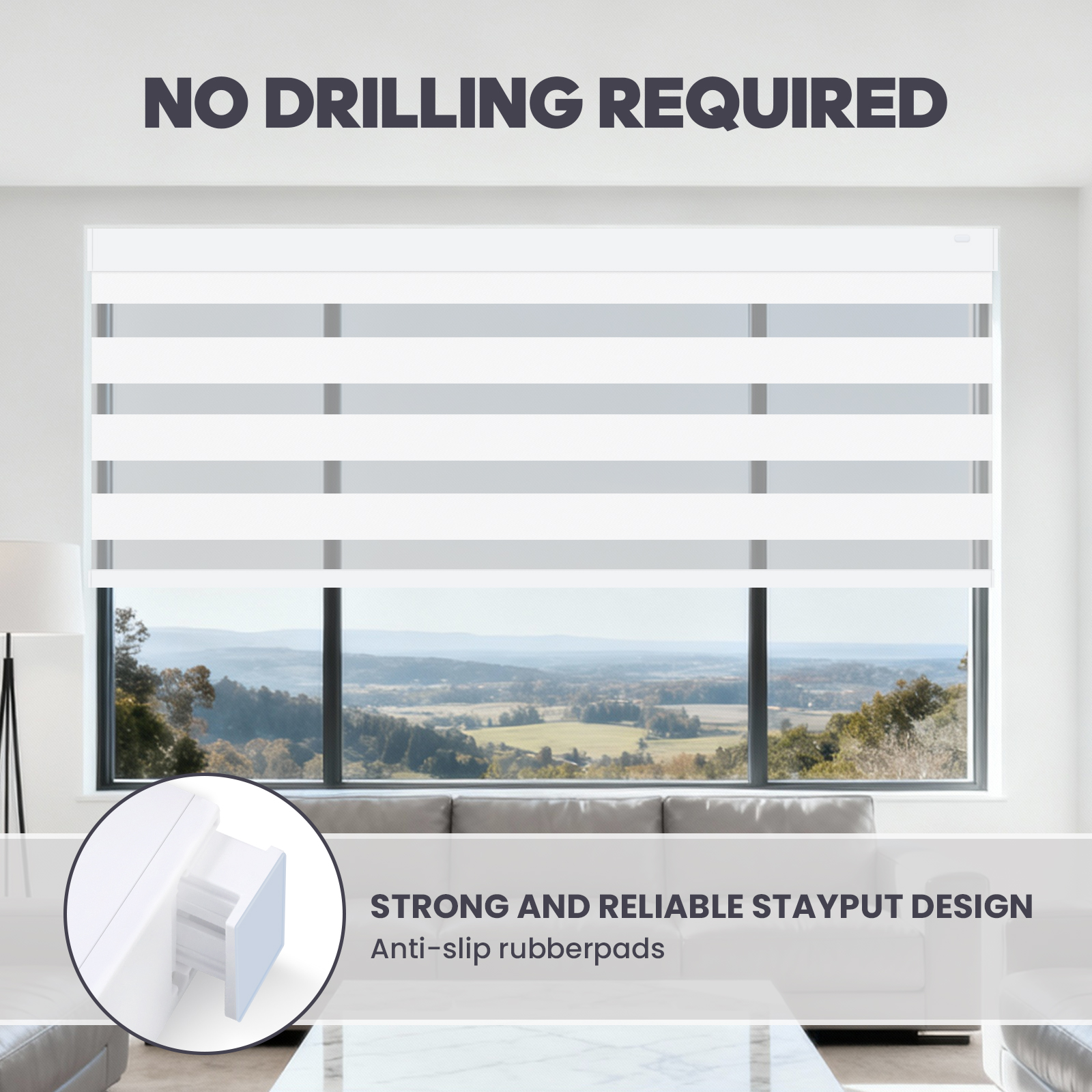
1. The flush headrail. Their headrail is low‑profile — about 2 inches tall — and sits close to the window frame. From across the room, it almost disappears. That's what you want. The window should feel open, not framed by a plastic box.
2. Cordless, wandless, distraction‑free. No dangling strings. No plastic wand sticking down the middle. Just a clean horizontal surface. In a bedroom or living room, this makes the space feel calmer. Your eye rests on the window view, not the hardware.
3. Consistent slat closure. When the blinds are fully tilted shut, the slats overlap without gaps. High‑quality fabric‑covered slats (like Mingchen's premium line) look like a smooth panel, not a row of disjointed strips. That's crucial for media rooms or any space where you want true darkness without ugly light streaks.
Venetian blinds come in basic white, beige, or gray. That's fine. But smart blinds (because they're motorized and often custom‑ordered) offer way more options.
In my recent projects, I've used:
Matte black – For a downtown loft with black window frames. The blinds blend into the architecture when raised, and add a graphic punch when lowered.
Warm wood‑grain laminate – For a Scandinavian‑inspired living room. The slats mimic oak but clean more easily. Smart motors hidden inside. Clients thought they were custom wood shades.
Soft ivory fabric‑wrapped slats – For a nursery. The fabric softens the light and adds warmth. The motor is so quiet it never wakes the baby.
My advice: Don't default to white. Get samples. Hold them against your wall color and trim. Smart blinds last for years, so choose something you truly love.
This is the part that surprised me. Because blinds don't just sit there — they move. And how they move affects the mood of the space.
With manual blinds, you usually leave them in one position all day. Half‑open, fully closed, whatever. You don't bother adjusting because it's work.
With smart blinds, you can program them to follow the sun. Morning: tilted to let in gentle east light. Afternoon: closed on the west side to block glare. Evening: fully open to enjoy the sunset, then automatically close after dark for privacy.
The result is a room that feels alive. The light changes throughout the day in a way that matches how you actually use the space. My clients constantly tell me: "I didn't realize how much I'd love watching the blinds move on their own."
It's not just convenience. It's atmosphere.
If you want smart blinds to look truly custom, here's a trick I use: mount them outside the window frame, not inside.
Inside mount (recessed) is standard. But if your window frame is shallow, the blind sticks out slightly. It looks fine, but not amazing.
Outside mount — where the blind attaches to the wall above the window — creates a cleaner line. The blind covers the entire window opening plus a few inches on each side. It feels more like a shade than a blind. And because smart blinds have no cords, there's nothing hanging down the side to ruin the silhouette.
Mingchen's brackets work for both. I always order the slightly wider size for outside mount. Worth it.
Standard blinds don't work well for arched, triangular, or very narrow windows. But smart motors allow for some interesting custom work.
I recently did a kitchen with a row of three small, high windows above the sink. Too high to reach manually. A traditional blind would have been useless. I installed three narrow Mingchen smart blinds linked to one remote. Now the client can tilt all three with one button. The windows look unified, not like an afterthought.
For arched windows, you're still better off with a custom shade. But for any rectangular window — even tiny ones — smart blinds are viable.
If you go with a plug‑in smart blind (instead of battery), there will be a small power cord running from the headrail to an outlet. That cord can be ugly. It can ruin the clean look you paid for.
My solution: Always choose battery‑powered for visible windows. The batteries last months. Charge them overnight when guests aren't around. No cords, no visual clutter.
If you must use plug‑in (for very large blinds that need more power), hide the cord behind furniture or inside cord channels painted to match your wall. Don't just let it dangle.
I was wrong about venetian blinds. The old ones deserved their bad reputation. But smart blinds — specifically well‑designed ones like Mingchen Sunshade — have changed the category.
They're clean. They're quiet. They move with intelligence. And when chosen carefully (right color, right mount, battery not cord), they elevate a room's design instead of dragging it down.
If you're an architect, designer, or just a homeowner who cares how things look, don't write off blinds. Look at the new generation. See them in person. I think you'll be surprised.
I certainly was.
— Sophia Chen, interior designer and Mingchen Sunshade specifier


Copyright © 2026 Weifang Mingchen Sunshade Technology Co., Ltd. All Rights Reserved.
 EN
EN

